Baltic Sea Region Hackathon 2026: Cross-border innovation for a safer future
How can free and secure societies endure in a world filled with crises and uncertainty? This is a question not only for global politics, but also for the students who came to this year’s Hackathon in Lübeck. The focus was on creative solutions to real-world problems, but also on exchange, togetherness, and the occasional new friendship along the way.
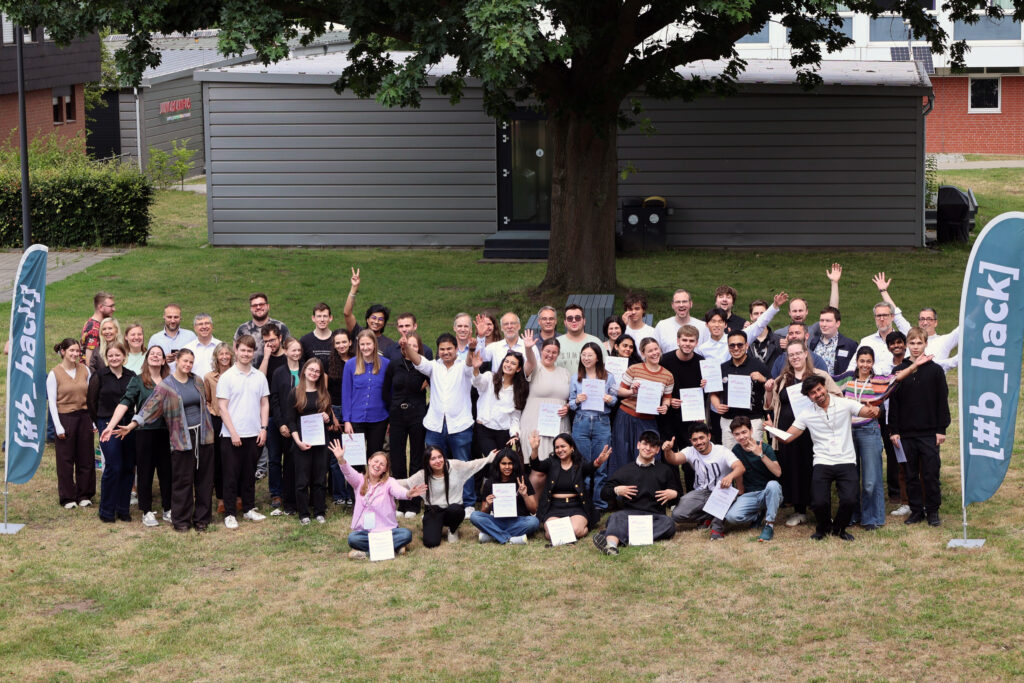
For the fourth time, Technische Hochschule Lübeck became a meeting point for young people from across the Baltic Sea Region. From 2 to 5 July 2026, the Baltic Sea Region Hackathon 2026 (#b_hack) brought together 44 international participants—including cultural studies students, computer scientists, and programmers—for three days of intensive collaboration on digital solutions to real societal challenges. Working across seven thematic tracks, they developed creative and innovative approaches to building a free and secure society.
“I was already here last year,” says Louise Coram from New Zealand, who is currently staying in Sweden. “I still keep in touch with my team,” she adds. The group is still in touch through a group chat where they continue to exchange ideas across national borders. Five out of six participants from last year’s Hackathon returned to Lübeck in 2026, just assigned to different teams. Why take part in the Hackathon again? “To keep my brain active,” says the Environmental Politics student.
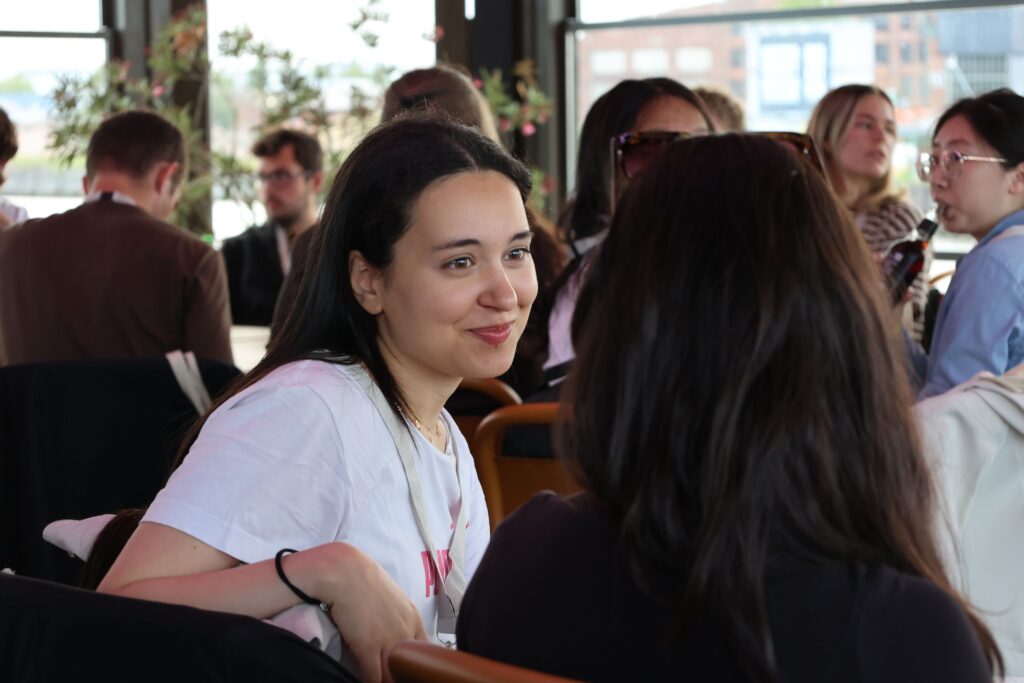
That evening, she met Paula Pāvila from Latvia, with whom she would spend the next few days working on the topic of fake news. Paula Pāvila is attending for the first time. She learned about the event through a colleague. The Intercultural Relations student from Riga had already spent a lot of time researching fake news and political activism. “We’re not all programmers, but I think that might be what makes it interesting,” she says.
Baltic Sea Region Hackathon: One problem, many perspectives
And that is exactly what the Hackathon is about: one topic, one problem, multiple viewpoints, one solution approach. Teams of up to seven students were formed in advance to ensure a mix of different disciplines.
On Friday and Saturday, it was time to get to work. The 44 students were divided into seven tracks, each addressing a different question related to the theme “Free and secure societies – cooperation in difficult times.”
Students tackle real geopolitical challenges
“In geopolitically tense times, we more than ever need formats of exchange that emphasise our democratic values and allow young people from different countries to work together on innovative topics,” says Guido Wendt, State Secretary at the Ministry for General and Vocational Education, Science, Research, and Culture in Schleswig-Holstein. “The Baltic Sea Region Hackathon combines this in a wonderfully creative and positive atmosphere at Technische Hochschule Lübeck and highlights how important digital innovation and cross-border cooperation are to us.”
“Technology can help detect fake news, identify cyberattacks, and strengthen resilience. That is exactly why young tech talents at the Baltic Sea Region Hackathon are developing solutions—for a Baltic Sea Region that stands together, remains free, and becomes safer,” says Cornelia Schmachtenberg, Minister for Agriculture, Rural Areas, Europe, and Consumer Protection.
A topic: freedom and security—even during stays abroad
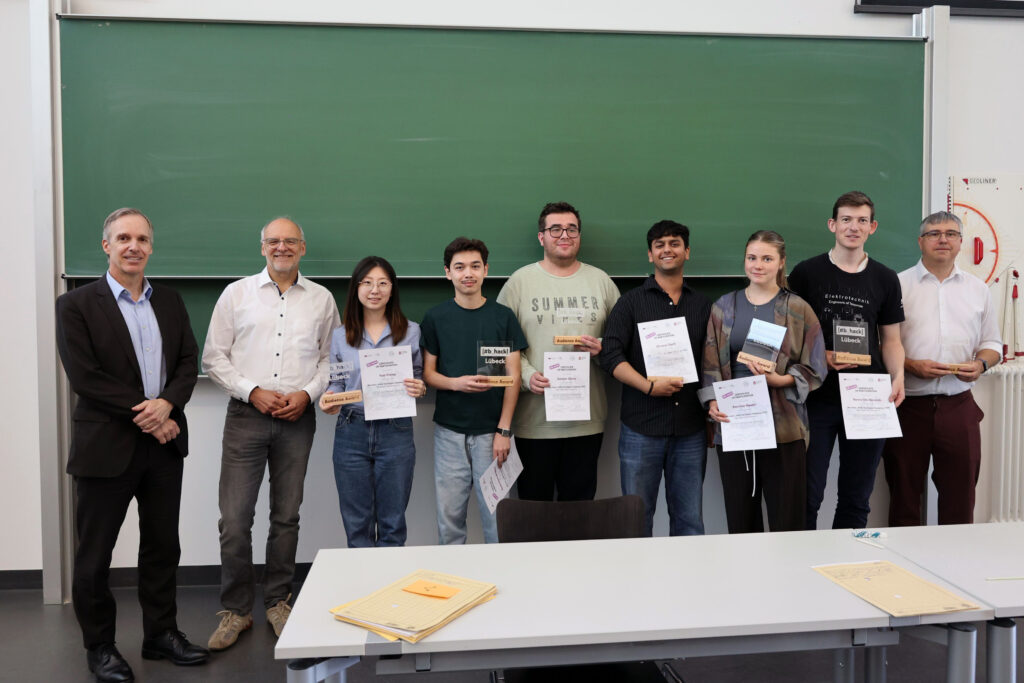
For the students Ruzimuhammad Babaev (Latvia), Yudi Cheng (Germany), Szymon Gorny (Poland), Shivang Gupta (Finland), Bernd Ole Heinrich (Germany), Karolina Vapper (Estonia), and Jiayi Gong (Germany), the working days focused specifically on freedom and security. Both concepts are highly individual, shaped by personal life, preferences, and experiences. What is allowed in one country can carry heavy penalties in another. Freedom and security are not universally transferable.
Group six, “Liberty and Security Dashboard,” identified relevant aspects of freedom and security for different groups while also exploring the concept of a platform that could display and compare key information across countries at a glance.
While they used AI to create visuals for their presentation—sending a panda on a journey around the world—the platform itself deliberately avoids AI-generated content: “We want to avoid fake news and hallucinations,” one of the presenters explains. That is also why all sources behind the platform’s information are transparent and accessible. Freedom and security also mean reliable information sources.
First place at Hackathon 2026: “Liberty and Security Dashboard”
“It is impressive how young people deal with problems in such a short time and develop solutions that are highly relevant geopolitically,” says Gustav Lindström, Director General of the Council of the Baltic Sea States.
With the “Liberty and Security Dashboard,” the students created a platform concept that compares information on security and freedom and helps students build decisions on a data-driven foundation rather than intuition alone. With this idea, they secured first place at the end of the Hackathon.
Hackathon: It’s about more than just winning
However, it quickly becomes clear that winning was not the most important outcome of the past days. “I feel very inspired,” says Paula Pāvila. “I had the chance to learn something outside my own field.” And a few small programming tricks will likely stay with her “for everyday use.”
“I have learned so much again,” says Louise Coram. Together with Paula Pāvila, she presented the project on fake news. “I don’t actually like it,” she adds with a smile. But she was so convinced by their results that she gladly took on the task. They developed a platform that give users an at-a-glance overview of political parties and their promises, and shows where the information actually comes from.
But it is not only the exchange of knowledge that leaves a mark—it is above all the sense of community. “At the beginning, we were strangers,” says Louise Coram about herself and her roommate. “Now we are friends.”
The Baltic Sea Region Hackathon is organised and funded by the state of Schleswig-Holstein in cooperation with the Council of the Baltic Sea States and Technische Hochschule Lübeck.
This article is based on the press release originally published by Technische Hochschule Lübeck.