
Expert Group on Sustainable Maritime Economy
The CBSS Expert Group on Sustainable Maritime Economy (EGSME) is a platform comprising national experts from the CBSS Member States who focus on maritime economy matters.
About EGSME
CBSS Expert Group on Sustainable Maritime Economy (EGSME) offers a platform for national experts from CBSS Member State line ministries dealing with maritime economy and the European Commission’s Directorate General for Maritime Affairs and Fisheries as well as other associated pan-Baltic organisations and stakeholders to coordinate and exchange knowledge and best practices concerning maritime sector’s sustainable growth and marine ecosystem protection.
Priorities
As an intergovernmental group of experts, the EGSME aims to:
- Promote, with the aim of increasing, the Baltic Sea Region’s competitiveness in different areas of sustainable maritime economy.
- Advocate decarbonised shipping.
- Position the Baltic Sea Region as a model region for maritime best practices in, inter alia, innovation, digitalization and environmental protection.
Activities
The activities of the EGSME are anchored in the UN Sustainable Development Goals, the Paris Climate Agreement as well as CBSS Baltic 2030 Action Plan promoting a coordinated action on Transition to a Sustainable Economy in the Baltic Sea Region. EGSME engages local, national and regional actors from the Baltic Sea Region to facilitate cross-sectoral approach in addressing global challenges on a regional level.
The Expert Group on Sustainable Maritime Economy under the CBSS Polish Presidency 2025-2026 will continue the work of the previous presidencies in the area of green shipping corridors, aiming to improve the common understanding of the concept, as well as to share views and best practices contributing to the potential development of green corridors in the future. Recognising the efforts of the Estonian Presidency on the digital twin for the Baltic Sea Region, the Polish Presidency will focus on exploring opportunities for cooperation in the area of collection and exchange of maritime data. This will take into account current projects and initiatives undertaken in the countries of the region in order to build awareness and establish cooperation networks.
The Polish Presidency would also like to launch a discussion on the problem of the unexploded ordnance dumped in the Baltic Sea, with a view to exploring whether there is support for establishing a a continuous dialogue leading to comprehensive action in this area.
During the previous CBSS EGSME Chairmanships the regional cooperation was boosted, among others, in the following areas:
- maritime clusters;
- coherent and integrated approach to maritime issues;
- implementation of the International Convention for the Control and Management of Ships’ Ballast Water and Sediments;
- alternative fuels in maritime sector;
- maritime and coastal tourism;
- small and medium sized ports in the Baltic Sea Region;
- localising solutions and implementation of SDG14 (with maritime sustainability indicators);
- land-based power generation for vessels;
- green shipping and digitalisation.
Resources
- The 2nd Open EGSME seminar under the Estonian Chairmanship on green shipping and marine data
- Outcomes of the CBSS Expert Seminar on Green Shipping Corridors and Food Waste under the Finnish Chairmanship
- CBSS Expert Group on Sustainable Maritime Economy Terms of Reference
Strategic Guiding Documents
- 2023 Wismar Declaration – “The Council reaffirmed the commitment of its members to the UN Sustainable Development Goals and the Paris Climate Agreement. It encouraged its members to contribute continuously to an ambitious, urgent and comprehensive implementation of these goals, through existing and future Baltic Sea Region mechanisms and platforms, including inter alia the Baltic 2030 Action Plan…”
- 2022 Kristiansand Declaration – “Climate neutrality by 2050 at the latest is our collective goal. We will scale up actions to ensure a green transition of the global economy, including accelerating green energy development, and decarbonising the heavy industry, transport and construction sectors. We strive to reduce emissions from agriculture and ensure a healthy marine environment in the Baltic Sea and our other ocean areas. We will enhance collaboration on the circular economy and renewable energies, diversify our energy supplies and rapidly reduce our dependency on fossil fuels”
- 2021 Vilnius II Declaration: A Vision for the Baltic Sea Region by 2030 – “The Region has in line with UN Agenda 2030, the Paris Agreement and the Baltic 2030 Action Plan, taken resolute steps, including de-carbonisation, towards climate neutrality and to climate resilience of key economic sectors, including industry, transport and construction, as well as enhancement of natural sinks, such as forests”.
- 2020 Bornholm Declaration – “…promotion of increased use in the region of off-shore wind power, carbon capture and storage in line with national legislation and shore-side power supply for ferries and cruise ships. These measures help strengthen the position of the Baltic Sea Region as a world leader in green research, innovation and technologies, in clean shipping and as a green tourist destination”.
EGSME members and partners
The EGSME Members are CBSS Member States (Denmark, Estonia, Finland, Germany, Iceland, Latvia, Lithuania, Norway, Poland, Sweden), European Commission and associated pan-Baltic organisations. The chairmanship rotates among the Member States on an annual basis following the CBSS Presidency (from July 1 to June 30).
Chairs
Poland:
- Ministry of Infrastructure
Members
-
- Denmark: Danish Maritime Authority
- European Commission: DG MARE
- Estonia: Ministry of Climate, Maritime Department
- Finland: Prime Minister’s Office of Finland
- Germany: German Federal Ministry of Transport
- Iceland: Ministry of Transport and Infrastructure
- Latvia: Ministry of Transport, Maritime Department
- Lithuania: Ministry of Foreign Affairs of Lithuania
- Norway: Norwegian Ministry of Trade, Industry and Fisheries
- Poland: Ministry of Infrastructure, Maritime Department
- Sweden: Ministry of Rural Affairs and Infrastructure, Government of Sweden
Pan-baltic organisations
-
- Baltic Sea Parliamentary Conference
-
- VASAB
-
- HELCOM
-
- Conference of Peripheral Maritime Regions, Baltic Sea Commission
-
- The Baltic Ports Organization
The Expert Group on Sustainable Maritime Economy under Polish Presidency will continue the work of the previous presidencies in the area of green shipping corridors, aiming at improving the common understanding of the concept, as well as sharing the views and best practices contributing to the potential development of the green corridors in the future. Recognising the Estonian Presidency efforts on the digital twin for the Baltic Sea region, the Polish Presidency will focus on exploring the possibilities of cooperation in the area of collection and exchange of maritime data, considering current projects and initiatives undertaken in the countries of the region in order to build awareness and establish cooperation networks.
The Polish Presidency would also like to launch a discussion on the problem of the unexploded ordnance dumped in the Baltic Sea, with a view to explore whether there is support for establishing constant dialogue for a comprehensive action in this area.
The Expert Group on Sustainable Maritime Economy under Polish Presidency will continue the work of the previous presidencies in the area of green shipping corridors, aiming at improving the common understanding of the concept, as well as sharing the views and best practices contributing to the potential development of the green corridors in the future. Recognising the Estonian Presidency efforts on the digital twin for the Baltic Sea region, the Polish Presidency will focus on exploring the possibilities of cooperation in the area of collection and exchange of maritime data, considering current projects and initiatives undertaken in the countries of the region in order to build awareness and establish cooperation networks.
The Polish Presidency would also like to launch a discussion on the problem of the unexploded ordnance dumped in the Baltic Sea, with a view to explore whether there is support for establishing constant dialogue for a comprehensive action in this area.
The Expert Group on Sustainable Maritime Economy under the CBSS Polish Presidency 2025–2026 will continue the work of previous presidencies in the area of green shipping corridors, aiming to improve the common understanding of the concept, as well as to share views and best practices that could contribute to the future development of green corridors. Recognising the efforts of the Estonian Presidency on the digital twin for the Baltic Sea Region, the Polish Presidency will focus on exploring opportunities for cooperation in the collection and exchange of maritime data. This will take into account ongoing projects and initiatives undertaken in the countries of the region in order to build awareness and establish cooperation networks.
The Polish Presidency would also like to launch a discussion on the issue of unexploded ordnance dumped in the Baltic Sea, with a view to exploring whether there is support for establishing a continuous dialogue leading to comprehensive action in this area.
Contact
Markus Helavuori, Deputy Director General, markus.helavuori@cbss,org
Latest News
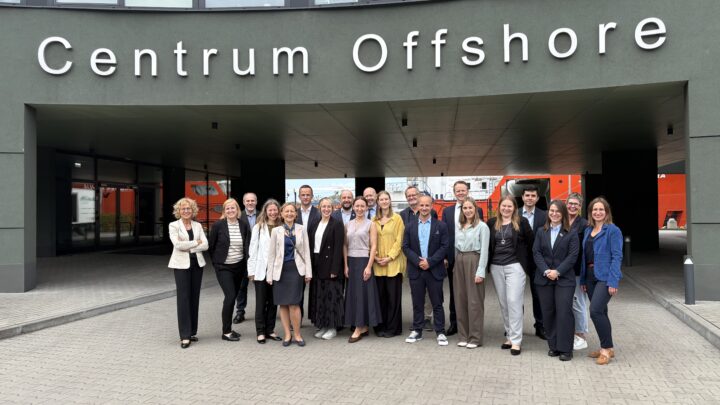
Green shipping corridors and the digital twin of the Baltic Sea at the centre of the EGSME meeting
How can the Baltic Sea Region accelerate the green transition of maritime transport while making better use of digital technologies? These questions were at the heart…
CBSS Maritime Experts Meet on Conventional and Chemical Weapons in the Baltic Sea
Maritime experts from CBSS Member States convened online on 9 December 2025 to examine the persistent challenge posed by unexploded ordnance (UXO) in the Baltic Sea, including…

Estonian CBSS Presidency Releases Baseline Report on Marine Digital Twins and Green Shipping Corridors
The Estonian Presidency of the Council of the Baltic Sea States (CBSS) has published a Baseline Report on Marine Digital Twins and Green Shipping Corridors in…

Estonian CBSS Presidency Hosts Expert Meetings and Events on Civil Protection, Maritime Sustainability, and Child Participation
Sustainable maritime economy takes centre stage On 12–13 May 2025, the CBSS Expert Group on Sustainable Maritime Economy (EGSME) held its second seminar under the…