
Icelandic Presidency 2026-2027
Iceland holds the Presidency of the Council of the Baltic Sea States (CBSS) from 1 July 2026 to 30 June 2027. The Icelandic Presidency is led by Iceland’s Minister for Foreign Affairs, Þorgerður Katrín Gunnarsdóttir, who will serve as the CBSS’s main representative and spokesperson throughout the 2026–2027 term.
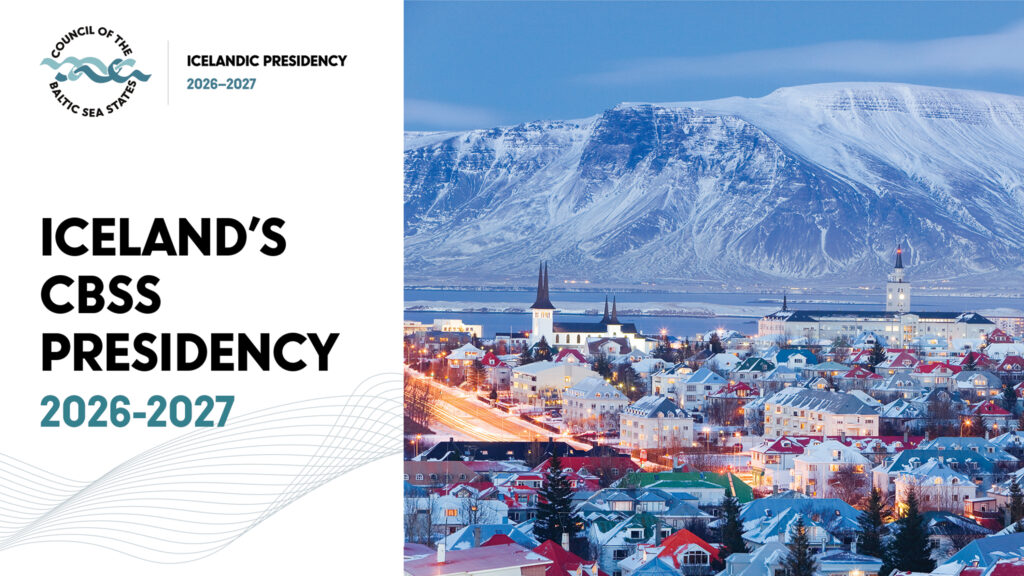
Iceland holds the Presidency of the CBSS from 1 July 2026 to 30 June 2027, taking over from Poland at a time of profound geopolitical change and rapidly evolving security challenges in the Baltic Sea Region. Against this backdrop, Iceland’s programme places resilience, preparedness, and regional cooperation at the centre of its work, while building on more than three decades of CBSS achievements in fostering trust, dialogue, and collaboration among its Member States.
The Presidency is led by Iceland’s Minister for Foreign Affairs, Þorgerður Katrín Gunnarsdóttir, who serves as the CBSS’s main representative and spokesperson throughout the 2026–2027 term.
On July 1st, Iceland assumes the Presidency of the Council of the Baltic Sea States. Iceland will seek to further strengthen the role of the CBSS as a relevant, flexible, and forward looking platform for cooperation in the Baltic Sea Region. By placing resilience at the core of its agenda, the Presidency will contribute to enhancing the region’s capacity to respond to current and emerging challenges, while upholding the shared values of democracy, security, human rights, sustainable development, and regional solidarity.
Þorgerður Katrín Gunnarsdóttir,
Minister for Foreign Affairs of ICELAND

The regional security context continues to evolve rapidly, requiring strengthened cooperation, enhanced preparedness, and sustained political coordination among the CBSS Member States.
The importance of strengthening the ability of countries and societies to withstand current security and environmental challenges has grown significantly in recent years. This is particularly relevant in the Baltic Sea Region, where increasing pressure from Russia’s hybrid threats has heightened the need for resilience, preparedness, and closer regional cooperation.
Reflecting this, the Icelandic Presidency will place resilience at the centre of its programme. It will continue to build on the practical cooperation and achievements of previous presidencies, in line with the CBSS’s three long-term and mutually reinforcing priorities: 1) Safe and Secure Region, 2) Sustainable and Prosperous Region and 3) Regional Identity.
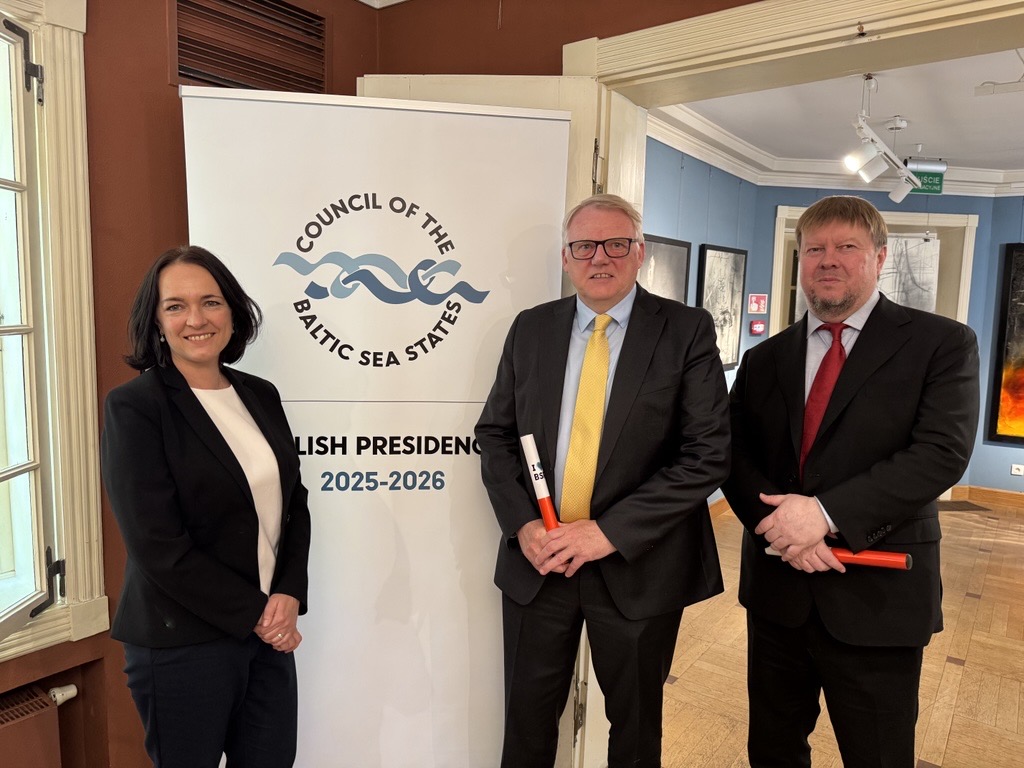
Photo: Polish Chair of the CBSS Committee of Senior Officials, Katarzyna Barcikowska, symbolically handed over the Chairmanship of the Council of the Baltic Sea States (CBSS) to Iceland’s representatives, Árni Þór Sigurðsson and Emil Breki Hreggviðsson (Sopot, May 2026).
Building on the excellent work carried out by the Polish Presidency, Iceland will focus on strengthening both the political and practical dimensions of the CBSS. Follow-up and implementation of the 2026 Sopot Declaration will be key, particularly continued cooperation at political and expert levels on emerging security challenges affecting the region, including the activities of the shadow fleet, hybrid threats, and risks to critical infrastructure and maritime security. Emphasis will be placed on ensuring complementarity with existing regional and international structures and avoiding duplication of efforts.
PRiorities of the icelandic presidency of the Council of the baltic sea states:
Civil Security, Preparedness and Societal Resilience
Under the Icelandic Presidency, the Civil Protection Network (CPN) will focus on intensified cooperation in the fields of civil security, civil protection, and societal preparedness, with a clear regional dimension. A comprehensive and whole-of-society approach to resilience will be promoted, recognising that modern crises increasingly require coordinated action between governments, local authorities, emergency services, civil society, and the private sector.
A specific focus will be on resilience and preparedness for natural hazards. Advanced technology is emerging as a critical tool in this effort, particularly through the development of early warning systems capable of monitoring environmental changes in real time. By integrating early warning systems using satellite-based sensors, AI-driven data analysis, and interconnected sensor networks, governments and communities will be better prepared for climate change hazards.
Iceland’s approach to resilience is informed by its own experience in managing natural hazards and societal disruptions. In recent years, the volcanic activity on the Reykjanes Peninsula, including the evacuation and continued challenges faced by the community of Grindavík, has demonstrated the importance of
preparedness, coordinated response mechanisms, public trust, and long-term recovery planning. The experience has highlighted the critical role of trauma-informed responses, effective public communication, including crisis communication, and strong cooperation between civil protection authorities, political leadership, municipalities, health services, volunteers, and local communities. It has also underscored the need for adaptable institutions capable of responding effectively to both sudden crises and protracted challenges.
The Icelandic Presidency will seek to facilitate dialogue within the CBSS on strengthening societal resilience, including psychological and social resilience, in the face of natural hazards, security threats, and large-scale disruptions.
Protection of Children at Risk
Under the Icelandic Presidency, the CBSS Expert Group on Children at Risk (CAR) will focus on enhancing resilience among vulnerable children, with particular attention to refugee children who have experienced trauma, displacement, and instability. The Presidency will assess and review resources and support measures available across the CBSS region, examining how Member States respond through national, municipal, and non-governmental services. To map existing practices and identify gaps, a questionnaire will be distributed to all Member States. The findings will form the basis of a publication, expected by May 2027, providing an overview of available services, support structures, and key contacts in each country.
This work will build on the CBSS’s broader efforts to promote inclusive and resilient child protection systems, including in times of crisis and emergency, and to strengthen the capacity of national systems to respond effectively to transnational child protection cases. Particular attention will be paid to ensuring child-centred approaches that support recovery, participation, and long-term well-being. The Presidency will also draw on ongoing CBSS initiatives aimed at enhancing child participation in decision-making processes, improving responses to online violence against children, supporting specialised interventions for child victims of violence and exploitation, and promoting excellence in the Barnahús model.
Recognising that refugee children are at heightened risk of trafficking and exploitation and are often among the most vulnerable groups in society, the Presidency will place particular emphasis on strengthening cooperation between child protection and anti-trafficking actors across the region. It will seek to identify and learn from promising practices across CBSS Member States, examining effective practices, identifying remaining challenges, and assessing how cross-border cooperation between municipalities, non-governmental organisations, and relevant authorities can be strengthened. Building on previous collaboration between CAR and the CBSS Task Force Against Trafficking in Human Beings (TF-THB), Iceland will explore opportunities for a joint initiative that enhances coordination, knowledge sharing, and support for refugee children and other children in vulnerable situations.
Counter-Trafficking and Regional Cooperation
During the Icelandic Presidency, the CBSS Task Force against Trafficking in Human Beings (TF-THB) will celebrate its 20th anniversary. This milestone provides an opportunity both to reflect on two decades of regional cooperation and achievements, and to identify new avenues for action.
In line with the overarching emphasis on resilience, the Task Force will focus on knowledge exchange, capacity-building, and policy dialogue in three areas. First, it will highlight the role of professionals working with survivors, with an emphasis on building trust through trauma-informed approaches. Second, it will prioritise efforts to reduce demand driving prostitution and other forms of sexual exploitation and trafficking. Third, it will strengthen national anti-trafficking coordination, ensuring that the rights and interests of survivors remain at the centre of all actions. Particular attention will be given to supporting cooperation between anti-trafficking stakeholders and child protection systems, recognising the complex and interconnected vulnerabilities faced by children at risk.
The Presidency will build on TF-THB’s longstanding work in developing capacity-building initiatives for professionals such as embassy personnel, law enforcement officers, media representatives, and frontline practitioners. It will also draw on the Task Force’s extensive body of research on trafficking for sexual and labour exploitation, regional trends, and emerging issues, as well as its experience organising training programmes, study visits, workshops, and international conferences that bring together partners from across Europe.
To support evidence-based policymaking and strengthen access to practical knowledge, a digital resource hub bringing together TF-THB publications, training materials, and key deliverables will be launched in Reykjavík in autumn 2026. The hub will serve as a lasting resource for governments, practitioners, and civil society organisations working to prevent trafficking, protect victims, and strengthen resilience across the Baltic Sea Region.
Maritime Issues
With respect to the Expert Group on Sustainable Maritime Economy, whose mandate concludes at the end of the Presidency, the Icelandic Presidency will continue discussions on its future direction. The aim is to consider all available options while determining how best to proceed with its essential initiatives in promoting sustainable maritime practices within the region.
The Presidency will also continue to address concerns related to the shadow fleet, including the legal and regulatory challenges arising from its activities. In this context, there is value in closer cooperation among relevant legal experts to share assessments, best practices, and possible approaches to enforcement and compliance issues. The Council will also consider whether this cooperation should become more formalised, while preserving the informal and flexible nature of this coordination.
Regional Identity and Youth Engagement
Strong youth engagement – such as that undertaken under the auspices of the Baltic Sea Region Youth Forum – and regional cooperation is key to advancing regional identity. Most of the issues addressed within the framework of Baltic Sea Region cooperation have an impact on young people and youth engagement has long been a cross-cutting priority in the work of the CBSS. This is a tradition that the Icelandic Presidency will follow.
Cultural Heritage
Sharing intangible and tangible cultural heritage plays an important role in consolidating regional identity. Within the framework of the Baltic Region Heritage Committee, the Icelandic Presidency will focus on the role of cultural heritage in preparedness and community resilience. Emphasis will be placed on the importance of strengthened coordination between cultural heritage institutions, civil protection authorities, and emergency response agencies.
The Icelandic Presidency aims to strengthen cooperation with CBSS observer states. This is particularly the case with Ukraine, with whom there is already extensive collaboration across several domains. Iceland recognises the valuable expertise and experiences that Ukraine can contribute to regional cooperation, including in the fields of civil preparedness, resilience-building, emergency response, digital governance, and crisis management.
Overall, Iceland’s Presidency will seek to further strengthen the role of the CBSS as a relevant, flexible, and forward-looking platform for cooperation in the Baltic Sea Region. By placing resilience at the core of its agenda, the Presidency will contribute to enhancing the region’s capacity to respond to current and emerging challenges, while upholding the shared values of democracy, security, human rights, sustainable development, and regional solidarity.

Minister for Foreign Affairs of Iceland
Þorgerður Katrín Gunnarsdóttir
is Iceland’s Minister for Foreign Affairs. She has been the leader of the Liberal Reform Party since 2017. She first took a seat in parliament in 1999 and was Minister of Education, Science, Sports and Culture from 2003 to 2009 and Minister of Fisheries and Agriculture in 2017. In addition to her political career she has also worked for the Iceland‘s National Broadcaster (Ríkisútvarpið) and Confederation of Icelandic Enterprises (SA). Gunnarsdottir holds a Cand. Jur. law degree from the University of Iceland. She is married to Kristján Arason, a business analyst, and they have three children.

Chair of the CBSS Committee of Senior Officials
Árni Þór Sigurðsson
is a senior Icelandic diplomat and former member of Alþingi. He has served as Iceland’s ambassador to Denmark, Russia, and Finland, as well as Ambassador for Arctic Affairs. He has also held senior parliamentary roles, including Deputy Speaker of Alþingi and Chair of the Foreign Affairs Committee, and worked in municipal leadership in Reykjavík. Most recently, he chaired the Grindavík Executive Committee, coordinating the national response following the evacuation due to volcanic activity. He currently serves as Ambassador in the Directorate for International Affairs and Policy at Iceland’s Ministry for Foreign Affairs. He holds master’s degrees in Economics and Russian language from the University of Oslo and in International Relations from the University of Iceland.

Selected events of the ICELANDIC Presidency 2026-2027
Resources:
- Presidency programme of the Icelandic Presidency
- Selected events of the Icelandic Presidency 2026-2027
- CBSS press release on the Icelandic Presidency
- Official website of the Ministry for Foreign Affairs of Iceland
- Presidency press release on the Icelandic MFA website (in English)
- Presidency news release on the Icelandic MFA website (in Icelandic)
Latest News
Child protection cooperation: Annual Report of the Polish Presidency of the CBSS Expert Group on Children at Risk 2025–2026
The Annual Report of the Polish Presidency of the CBSS Expert Group on Children at Risk 2025–2026 focuses on unaccompanied children, children with refugee experience, foreign minors…
Iceland launches its CBSS Presidency of the Civil Protection Network
Iceland, which assumed the Presidency of the Council of the Baltic Sea States (CBSS) on 1 July 2026, formally launched its chairmanship of the CBSS Civil…

BSR-NOVA members to meet on civil protection cooperation and emerging risks
The Baltic Sea Region Network of Volunteer Organisations and Authorities (BSR-NOVA) will hold its next meeting on 29 September 2026, focusing on civil protection cooperation, regional projects…
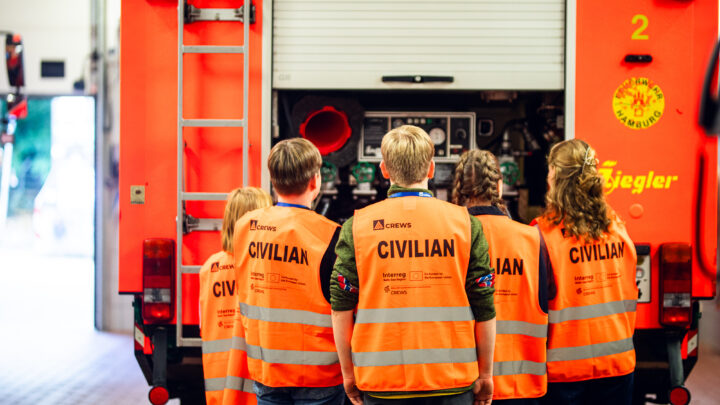
Strengthening public-civil cooperation with spontaneous volunteers: CREWS pilot exercise in Hamburg
Hosted by the CREWS lead partner, the Hamburg City District of Altona and Hamburg Fire and Rescue Services in Hamburg-Altona on 8–9 September 2026, the…