Civil Security
We bring fire fighters, rescue services, border and coastal guards, police and volunteers from different countries and all levels around the same table for a dialogue.
Overview
In recent years the Baltic Sea Region (BSR) has been affected by a multitude of disasters and crises of increased interconnectedness and complexity. When combined, they present a serious challenge for the region. Climate change-related risks, pandemics and the consequences of the war raging at the region’s borders demand attention. Our region is becoming more connected, but that does not mean that we share the same understanding of threats and how to deal with them. That is why it is important to build common attitudes towards societal security threats and a shared understanding of prevention, preparedness, and response as well as recovery processes in connection with disasters.
This is the essence and the main purpose of cooperation in the area of civil security: building a common societal security culture in the BSR. A broad, whole-of-society approach and cooperation, readiness to act jointly and shared know-how are important components of effective crisis management whenever disasters or accidents occur.
The CBSS is helping to build a common societal security culture in the BSR through two main cooperation structures:
- CBSS Civil Protection Network (CPN)
- by co-coordinating the Policy Area Secure (PA Secure) of the EU Strategy for the Baltic Sea Region (EUSBSR).
These two networks are not working separately, the CPN and PA Secure activities are closely interlinked. This close cooperation and mutual enforcement determine the success of the work carried out in civil protection in the BSR, brings extra energy and resources into civil protection activities and projects and makes the region safer.
Our work
We bring together professionals working in civil security from different countries around the same table for dialogue. They represent all levels — from ministers and directors general to firefighters and volunteers. The dialogue takes many forms: meetings, workshops, conferences, joint exercises and projects. The goal is always to build trust and long-term working relationships, and create a network of professionals, who would not hesitate to contact each other when a crisis comes.
Often, to organise a joint activity, our networks of professionals need partners, funding, or access to the latest scientific research results. Using our knowledge of the region, we help them find partners, connect with university research teams working on relevant topics, or identify funding sources that support projects in civil security.
We also make sure that the lessons learned from exercises, projects, and expert discussions are shared as widely as possible and reach both practitioners and policymakers. To achieve this, we monitor the latest developments in civil security and share the most important ones through our website, mailing lists, and social media channels.
Strategic documents
- Joint Position on Enhancing Cooperation in Civil Protection Area
- Oslo Declaration on Region Cooperation in the Civil Protection Network
- Vilnius II Declaration: […] The Region experiences significant progress in regional cooperation in civil protection, especially the prevention, preparedness and response against emergencies, including oil pollution, forest fires and in maritime search and rescue […].
- CBSS Action Plan 2021-2025
- EUSBSR Action Plan
Projects
CREWS (2025-2028)
The CREWS project addresses the urgent need for enhanced disaster risk reduction capacities in the Baltic Sea Region. By leveraging the potential of civil society in disaster scenarios, CREWS empowers local communities and bridges the gap between formal and informal actors in disaster management.
CREWS fosters transnational cooperation and knowledge exchange to develop a joint collaboration mechanism for public players and civil society actors, adaptable to regional needs. The project outputs include a collaboration model and a digital tool that facilitate effective coordination between public authorities and civil actors. By enhancing resilience and optimising disaster risk reduction capacities, CREWS promotes a whole-of-society approach to crisis management.
MUNIMAP (2024-2027)
In an effort to address the persistent threat posed by dumped munitions in the Baltic Sea and the Skagerrak, the MUNIMAP project, or Baltic Sea Munition Remediation Roadmap, embarks on a crucial mission to activate, speed up and coordinate the Baltic Sea munitions remediation.
Based on the outcomes of previous successful Interreg projects dealing with dumped munitions, MUNIMAP aims to catalyse, accelerate, and coordinate national processes.
MUNI-RISK (2024-2027)
MUNI-RISK, or Mitigation of Risks Due to Submerged Munitions for a Sustainable Development of the Baltic Sea, is an EU-funded project focused on tackling the risks from old munitions lying on the seabed in the Baltic Sea.
These munitions in the sea, remnants of past conflicts such as the Second World War, pose environmental and safety risks that need to be carefully managed.
MUNI-RISK brings together scientists and practitioners to find solutions that support safe maritime activities, such as fishing, and responsible marine resource development, including building offshore wind farms. By the end of the MUNI-RISK project, countries around the Baltic Sea will have practical tools and guidelines to safely manage munitions risks.
Razom (2024-2026)
Razom, which means “together” in Ukrainian, is a transnational collaborative project that aims to support European cohesion and Ukraine’s ambitions to widen its network and work more closely with European institutions. It will do so by enhancing knowledge and capacity, identifying areas for improvement, sharing experiences and good practices, discussing common challenges, and providing strategy and policy recommendations.
Secure Kids (2023-2025)
Secure Kids project strengthens the sustainability and impact of child participation mechanisms in decision-making processes at both national and local levels with a specific focus on decisions and action to build safe and secure societies, including their resilience and ability to prevent, prepare, respond, and adapt to different types of hazards and emergencies.
NEEDS (2020-2023)
Needs-based Education and Studies in Societal Security (NEEDS) project aims to strengthen the quality, attractiveness, and scope of education in societal security through tackling the mismatches between the focus of education, and the knowledge needs of the field. The objective of NEEDS is to better prepare the next generation tasked to work in the field of societal security by boosting their educational experiences with the most relevant, field-specific, and up-to-date knowledge and skills.
BALTinnoSEC (2021-2023)
Pan-Baltic Cross-Sectoral Innovation in Societal Security (BALTinnoSEC) project aims to investigate the feasibility of an interface, connecting civil security actors in constellations, focused on tackling risks, specific to the BSR. The interface is envisioned as a problem-solving platform or forum for regular off- and online meetings of practitioners, researchers and business, thus sharing access to the latest management solutions and technologies, cutting costs and time for all involved.
VOALA (2022-2024)
Volunteers and Local Authorities – Baltic Sea Region Network (VOALA) is a transnational project that aims to enhance society’s resilience to natural and man-made disasters. More specifically the project maximises the effectiveness and enhance international practical cooperation and joint preparedness among authorities, volunteer organisations and citizens in the field of civil protection; and clarifies and strengthens the role/mission of volunteers in national legislation, plans and operational procedures and to improve the overall coordination of volunteers.
EUSBSR PA Secure coordination (2022-2024)
The project supports the Policy Area Secure Coordinators (PAC) in fulfilling their roles and responsibilities. The goal of PA Secure is to build a common societal security culture in the BSR to enable developing common capacities for strengthening societal security and reducing vulnerabilities in coping with transboundary challenges. PA Secure aims to strengthen civil protection capacities to jointly manage cases of major cross-border emergencies that could cause severe effects on society. It supports also enhancing capabilities to combat malicious threats, particularly those related to THB and violating children’s rights.
Baltic Excellence Programme in Societal Security
The overall aim of the Baltic Excellence Programme (BEP), organised every year by the CBSS CPN Presidency, is to enhance the capacity of civil protection and law enforcement organisations. These goals are achieved by engaging experts, who hold a key to strategic leadership positions at the local, regional and national levels. The programmes offer unique opportunities for the participants to share experiences and best practices among peers, acquire new knowledge and enhance leadership skills through the combination of theory and practice. The participation in the course also increases institutional knowledge and strengthens the ties between the agencies playing a central role in crisis management in the BSR.
PSF Projects
Safe Actions for Environment – Baltic Solutions to the Black Sea (SAFE-BS2BKS) (2025-2027)
The goal of the SAFE-BS2BKS project is to transfer and implement the most effective and safe techniques used in the Baltic Sea for managing underwater munitions in the Black Sea region, with a strong focus on environmental security and the sustainability of marine ecosystems, especially in protected areas.
The project leader H9 (the EU and the Contracting Parties to HELCOM that are also Member States of the EU) will leverage its macro-regional network to foster discussions and organize key stakeholder dialogue and workshops. This will provide a substantial input for HELCOM BSAP action S34 while ensuring cross-sectoral multidisciplinary outreach and knowledge transfer to the Black Sea region and Ukraine in particular. Activities will apply proven Baltic methods for assessing and mitigating hazards from submerged munitions, integrating them into marine monitoring and climate adaptation strategies.
Special care will be taken in environmentally protected and sensitive marine areas where sea-dumped munitions can harm biodiversity and ecosystem integrity. Black Sea stakeholders will gain essential expertise through this exchange of knowledge and training. The project will develop an Action Plan with recommendations and an outline of future actions for the safe management of unexploded ordnances in the Black Sea, ensuring structured and coordinated marine environmental protection and risk management.
Joint Crisis Communication in the Baltic Region (2023-2025)
The Swedish Civil Contingencies Agency, MSB has a strong engagement in the Baltic Sea Region (BSR) and since many years back the member of the CBSS Civil Protection Network (CPN). In addition to that from 2013, based on the Swedish government decision, MSB coordinates the Policy Area Secure (PA Secure) within the EU:s Strategy for the Baltic Sea Region. The crisis communication is one of the CPN and PA Secure prioritised cooperation area. This project will be implemented in a close partnership with the civil protection authorities in the BSR and will give the opportunity to intensify and increase our common efforts to make the BSR a safe region to live in.
Communication before and during crisis is one of the most important tools to build preparedness for and handle crisis – regardless if the current crisis is due to the consequences of a war in a nearby country or caused by climate change. People who are prepared and know how to act when the crisis comes are more safe and secure.
Communication to the public also contributes to regional identity and in the long run to sustainability since people get the tools to make the right decisions – before and during crisis.
Prepared Together: Stronger Together (2023-2025)
Directly related to the current call ‘Safe and Secure Region’ focusing on promoting better preparedness for an increasingly unstable security environment, through inter-regional cooperation of the northern Baltic, central Baltic, and southern Baltic disaster preparedness experts. Project will promote expert cooperation across the region and establish a regional emerging threat and best-practice exchange platform for sharing practical approaches to increasing preparedness in the population. Concerns and current preparedness level of the Finnish, Latvian, and German population will be established. Results and best-practice approaches will be shared with the national governments and structures responsible for disaster preparedness, as well as the population, and disaster preparedness experts in other Baltic countries to promote a coordinated regional response. Consultations will advise national governments on emerging risks, regional trends, and practical solutions to increase awareness and resilience. Concerns and shortcomings will be used to promote a joint approach to these issues to increase cooperation among the CBSS Member States. Addresses 2022 Oslo Declaration on Regional Cooperation in the Civil Protection Network, CBSS Vilnius II Declaration, CBSS Action plan 2021-2025, where political commitments were made to promote regional cooperation in civil protection, in preparing and responding to emergencies, and UN Sendai Framework for Disaster Risk Reduction 2015-2030.
BYFORES (2022-2024)
Baltic Youth for Resilient Society (BYFORES) aims to enhance resilience to natural and man-made disasters by strengthening inclusive, cross-sectoral cooperation between authorities and volunteer organisations in crisis management in the Baltic Sea Region with a special focus on youth engagement. The project looks into the role that young people can play in managing and coping with disaster risks and reducing vulnerability through capacity building, education, and awareness raising.
A Safe Place (2021-2022)
The project investigates how women’s safety has changed during the pandemic and provides the target groups with the knowledge, strategies, and methodologies needed to tackle this social issue and efficiently support survivors of violence. Furthermore, the project will represent a safe place for women, a chance to feel free to cultivate their interests and share their feelings.
Civic Education for Resilience of Communities (2021-2022)
Project “DE-PL-LT to Crises by creating a system of modern training as well as professional qualifications for civil protection educators” aims to enable citizens to raise individual competences, to create a system of modern training, as well as professional qualifications for educators in the field of civil protection.
Improving communication with migrants for crisis preparedness: lessons learned from COVID-19 (2021-2022)
The project aims at developing an appropriate communication plan which can provide a quick response to the current crisis and future emergency situations by disseminating relevant information among migrant communities. It also seeks to strengthen cooperation between the states of the Baltic Sea Region to deal with cross-border crisis. The project analyses the multilingual information provided during the COVID-19 crisis by stakeholders from different sectors (governmental institutions, companies, universities, NGOs and media) in Estonia, Finland and Latvia; and carries out a cross-national comparative study to identify a series of good practices which serve as the basis to suggest new strategies in translation policies. The resulting guidelines will contribute to a faster recovery from the current crisis and address future emergency situations in the Baltic Sea Region.
Publications
- Guidance for Inclusive Crisis Communication with Children developed by the Secure Kids project
- Existing mechanisms and processes for child and youth participation in Disaster Risk Reduction (DRR) in Estonia, Latvia, Lithuania, Poland and Sweden
- Baltic Sea Youth Dialogue Engagement Roadmap 2022
- Digital solutions for online learning in societal security
- Key Observations and Recommendations of the NEEDS Project
- The Role of Children and Youth in Building Resilient Societies in the Baltic Sea Region
- Enhancing Societal Security Graduate Employability in the Baltic Sea Region
- Societal Security as Higher Education: State of the Art in the Baltic Sea Region
- An Evaluation of the Development and Effectiveness of PA Secure 2013-19
- The Role of Local Governments in Adapting to the Climate: A Regulatory Requirements and Support Mechanisms Overview
- The Sendai Framework in the Baltic Sea Region
- Mapping of Responsibilities for CBRNE Emergency Management in the Baltic Sea Region
- Common Societal Security Culture in the Baltic Sea Region: Basics and the Way Forward
- Soft Security and Migration in the Baltic Sea Region
- The Baltic Sea Region Methodology for Risk and Capability Assessment – A First Approach
Facts & Figures
- Connecting professionals in civil protection – From 2012 to 2023, the Baltic Leadership Programme/Baltic Excellence Programme in Civil Security brought together over 150 experts holding key leadership positions in civil protection and law enforcement from all CBSS Member States.
- Exploring meaningful participation of children and youth in disaster risk reduction – Children and youth’s vulnerability to disasters is expected to increase as the intensity and frequency of natural disasters increase. Building resilience in children and youth and their communities through reducing their vulnerability to disasters is important for every country in the BSR. CBSS initiated a series of projects (ChyResilience, Secure Kids) to explore how children and youth can contribute to the region’s resilience.
- Supporting Ukraine – In a bid to better understand the challenges faced by Polish authorities responding to the Ukrainian refugee crisis, an international delegation, of which the CBSS was part, travelled to several Polish cities including Warsaw and Przemyśl on 10-12 May 2022. Ukrainian civil protection delegation was invited to the BALTinnoSEC pilot Forum to share their experiences in crisis communication. A project helping Ukrainian NGOs to increase resilience of communities through non-formal education in civil protection was initiated.
- Assisting with national risk assessments – In 2014-2018, CBSS Initiated a sequence of transnational projects, focused on strengthening the national resilience, which helped a number of countries to create their national risk assessment strategies.
- 22 years since the first BSR intergovernmental agreement was signed – on the exchange of radiation monitoring data – Established in 1992, EGRNS is the first and the oldest CBSS Expert Group, which was instrumental in preparing an intergovernmental agreement signed under the auspices of CBSS in 2001. Still operational, the agreement set the legal and administrative basis for monitoring and exchange of data on radioactivity in the air, soil and water in the BSR.
Latest News
CBSS Leads New International Cooperation Project on FIMI
The CBSS has received funding from the Swedish Institute for the FIMI-COHERE project, which is being implemented with partner organisations in Finland, Lithuania, Poland and…
Iceland launches its CBSS Presidency of the Civil Protection Network
Iceland, which assumed the Presidency of the Council of the Baltic Sea States (CBSS) on 1 July 2026, formally launched its chairmanship of the CBSS Civil…
BSR-NOVA members to meet on civil protection cooperation and emerging risks
The Baltic Sea Region Network of Volunteer Organisations and Authorities (BSR-NOVA) will hold its next meeting on 29 September 2026, focusing on civil protection cooperation, regional projects…
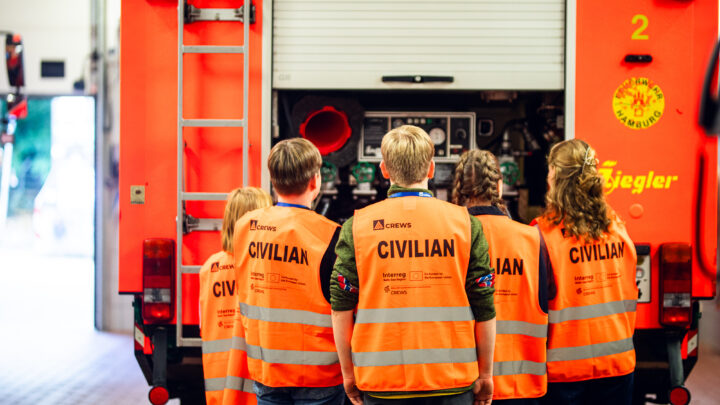
Strengthening public-civil cooperation with spontaneous volunteers: CREWS pilot exercise in Hamburg
Hosted by the CREWS lead partner, the Hamburg City District of Altona and Hamburg Fire and Rescue Services in Hamburg-Altona on 8–9 September 2026, the…