CBSS Annual Report 2025–2026: security and resilience at the centre of the concluded Polish Presidency
Read the Annual Report of the Polish CBSS Presidency 2025–2026, which documents a year in which the Council strengthened its political role and placed security and resilience more firmly at the centre of regional cooperation.
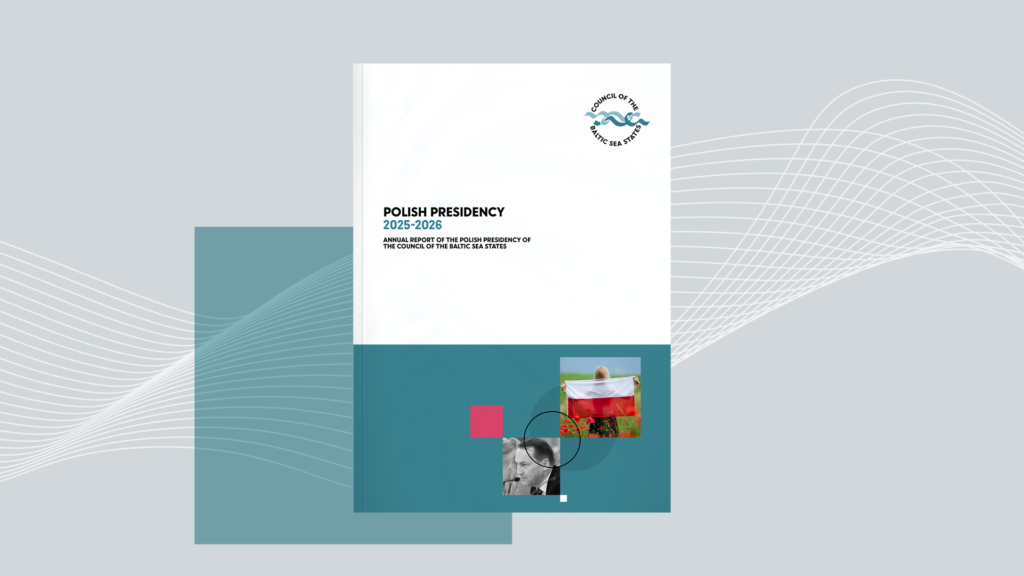
The Council of the Baltic Sea States (CBSS) has published its Annual Report 2025–2026, covering the Polish Presidency from 1 July 2025 to 30 June 2026. At its core is a significant development in the role of the CBSS: a stronger focus on security-related cooperation in response to the changing security environment in the Baltic Sea Region.
Under the Polish Presidency, the CBSS expanded its security agenda and political dialogue, notably focusing on critical infrastructure, Russia’s shadow fleet, foreign information manipulation and interference (FIMI) and broader resilience, while integrating security more closely into existing areas of CBSS cooperation.
The Sopot Declaration, adopted in May 2026 at the end of Poland’s Presidency tenure, reinforced this shift, calling for closer regional cooperation on security and resilience.
This direction continues under the Icelandic CBSS Presidency 2026–2027, with resilience at the centre of its programme.
The annual report was adopted by the CBSS Committee of Senior Officials (CSO) at its first meeting under the Icelandic Presidency, held in Reykjavík on 15–16 September 2026. The meeting also included study visits to Grindavík and the Svartsengi geothermal power plant, highlighting Iceland’s experience in civil security and preparedness.
The evacuation of Grindavík in 2023 and continuing volcanic activity on the Reykjanes Peninsula have demonstrated the importance of preparedness and coordinated crisis response — lessons that are informing the Icelandic Presidency’s focus on societal resilience and security.