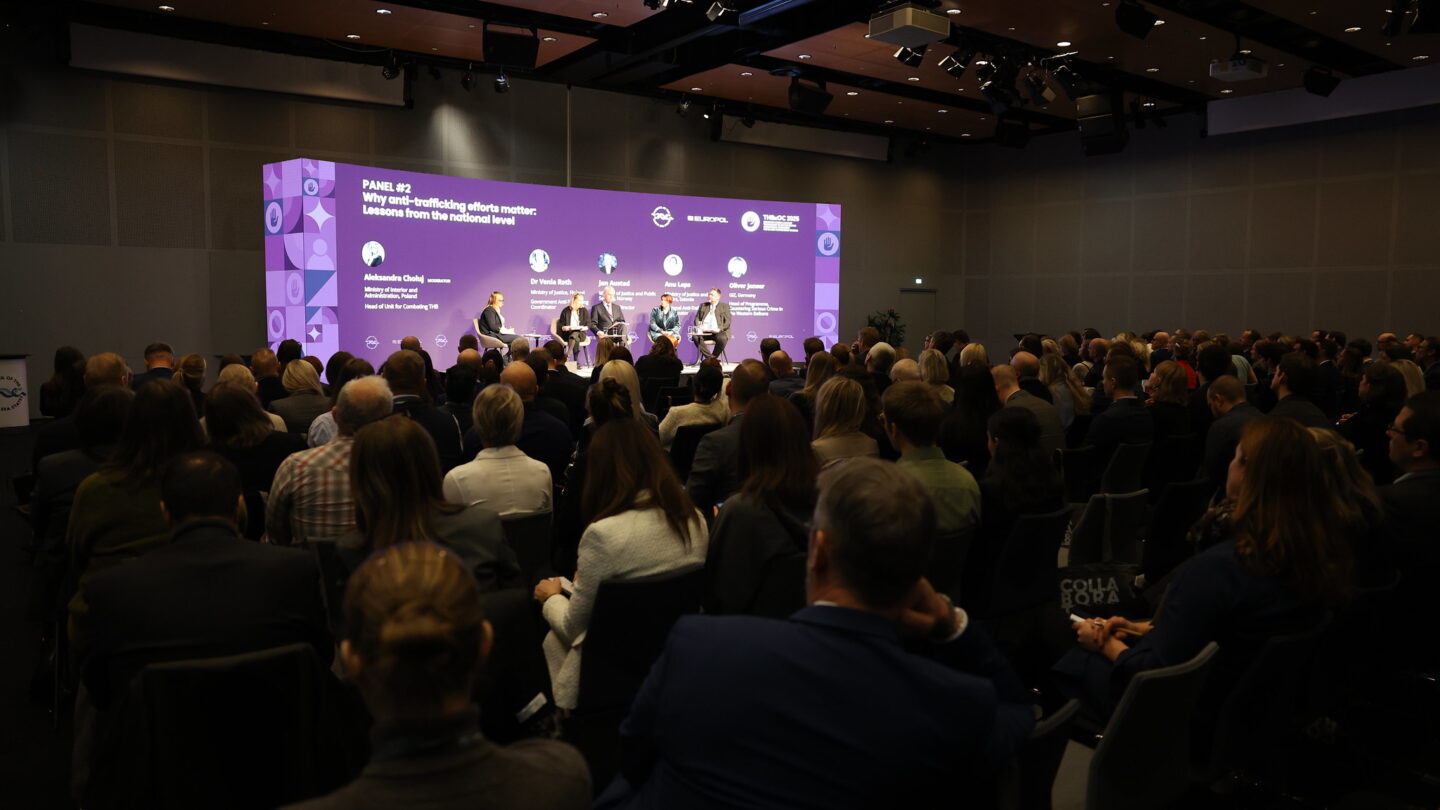
Task Force Against Trafficking in Human Beings
The Task Force Against Trafficking in Human Beings is the CBSS expert group on anti-trafficking. Established by CBSS Member State Heads of Government in 2006, its mission is to strengthen anti-trafficking policies and improve preventive and protective work.
About
The CBSS Task Force Against Trafficking in Human Beings (TF-THB) works toward building a Baltic Sea Region where human trafficking is actively combated through continuous efforts to eliminate this crime and ensure the protection of vulnerable individuals. The States in the region recognise the risk factors and vulnerabilities that facilitate human trafficking and are committed to disrupting criminal schemes, prosecuting and convicting perpetrators, and ensuring that victims are adequately protected and assisted.
The group is composed of representatives from the CBSS Member States — from ministries responsible for anti-trafficking coordination and efforts. It holds regular expert sessions and is supported by the TF-THB Unit at the CBSS Secretariat in Stockholm. The TF-THB bridges national and international levels of expertise, combining knowledge exchange and policy dialogue with the implementation of regional anti-trafficking projects.
The Chair of the TF-THB rotates among the Member States on an annual basis following the CBSS Presidency (from July 1 to June 30). The Chair sets priorities for the TF-THB’s work during its Presidency.
The TF-THB Unit at the Secretariat assists the Presidency and Member States and ensures the continuity of the TF-THB. Its responsibilities include developing and implementing transnational projects, representing the TF-THB at events and in international networks, and disseminating the results of the group’s work.
The strength of the TF-THB lies in its ability to promote dialogue and mutual assistance between the Member States. The group also contributes to providing rapid regional responses to new challenges, such as the humanitarian crisis in Ukraine resulting from the unprovoked Russian aggression.
Objectives
The TF-THB seeks to advance a coherent, multidisciplinary response to human trafficking in the Baltic Sea Region. In its 2025-2030 Strategic Plan, it has set out the following objectives:
- Serving as a regional expertise centre – producing and disseminating knowledge through research, analysis, and training activities.
- Understanding human trafficking within organised crime – strengthening knowledge on how organised trafficking networks operate across the region.
- Addressing all forms of exploitation of human trafficking – focusing both on prevalent trends as well as emerging developments, such as tech-facilitated trafficking.
- Targeting the key factors enabling and driving human trafficking – supporting efforts to reduce demand for all forms of human trafficking.
- Ensuring synergies and strategic partnerships – collaborating with other CBSS bodies, regional networks, and international stakeholders within and beyond the region.
- Improving victim protection and empowerment – enhancing support to all victims of human trafficking, including highly vulnerable groups such as homeless individuals, unaccompanied children, and persons with disabilities.
- Emphasising the gender dimension of human trafficking – advancing policies and practices that consider gender-based vulnerabilities and the specific risks faced by LGBTQIA+ individuals.
- Addressing human trafficking in a wider migration context – recognising the interlinkages between human trafficking and mixed migration flows.
projects and Activities
PEX-BSR (2024-2025)
The PEX-BSR project has strengthened the knowledge and skills of anti-trafficking professionals. It has focused on building the capacity of law enforcement, highlighting the experiences of vulnerable groups such as youth and LGTBQIA+ persons, and collaborating with Ukraine. Project activities have included:
- An Investigation Protocol for law enforcement, developed in collaboration with police and prosecution authorities across the region and Ukraine, as well as Europol and Frontex
- A comprehensive report on human trafficking for sexual exploitation in the Baltic Sea Region
- The European Forum against Trafficking in Human Beings – Countering Organised Crime and Protecting Victims: An international law enforcement conference on human trafficking as organised crime
FRAUD (2024-2025)
The FRAUD project examined the links between human trafficking and benefit fraud. A key output was a pilot study, which was presented in a seminar at the Swedish Parliament. The study provides a legal conceptualisation of benefit fraud in the context of human trafficking and explores whether the victims of such schemes could be considered trafficking victims under international legal frameworks.
CAPE (2019-2024)
The CAPE project (CAPE, CAPE II, CAPE IV) focused on combatting human trafficking for labour exploitation. Project outputs included:
- Research reports on human trafficking for labour exploitation in CBSS Member States
- Study visits, workshops, and other events for frontline professionals
- Awareness-raising activities for labour migrants and the general public
- The European Forum Against Human Trafficking for Forced Labour and Labour Exploitation: an international conference that gathered together over 200 participants from government authorities, NGOs, academia, and other sectors
Together, these activities enhanced the knowledge of anti-trafficking professionals and raised political awareness of labour exploitation in Sweden and across the Baltic Sea Region.
Handbook for Diplomats
The CBSS Handbook for Embassies and Diplomatic Missions on How to Assist and Protect Victims of Human Trafficking provides embassies with tools to identify trafficking in human beings and assist and refer possible victims. The Handbook was first published in 2011, and a revised edition was completed in 2022. It is now widely used across the Baltic Sea Region and beyond. The TF-THB has also delivered training sessions for Ministries for Foreign Affairs and developed an online training module based on the publication.
Baltic Sea Region Transnational Referral Mechanism
The Baltic Sea Region Transnational Referral Mechanism (BSR-TRM) promotes the safe transnational assistance and referral of victims of trafficking to services. It covers the CBSS Member States along with Ukraine, Bulgaria and Romania. The TRM was developed as part of the HOF-BSR project (2018) and updated during the 2022-2024 PROMISE-TRM project.
Documents
- CBSS Task Force against Trafficking in Human Beings Strategy 2025-2030
- CBSS Task Force against Trafficking in Human Beings Terms of Reference 2025-2030
- Effectively identifying, disrupting and countering THB for labour exploitation: A Roadmap for Sweden (2025)
- Human Trafficking for Benefit Fraud and Related Financial Fraud: Securing a Steady Revenue Stream (2024)
- Human Trafficking and Human Exploitation in the Swedish Labour Market: A Follow-Up (2024)
- Human Trafficking – Baltic Sea Round-up report 2022 (2022)
- New discussions on the complicated relationship between Poland and forced labour (2020)
- Human Trafficking and Exploitation in the Swedish Labour Market: an overview. (2020)
- Labour Exploitation, Forced labour and Human Trafficking in Germany. Current Challenges and Developments (2020)
- Media and Trafficking in Human Beings – guidelines (2019)
- Human Trafficking Glossary (2019)
- Road map for integration of victims of human trafficking among migrants in Finland, Germany, and Sweden (2018)
- Guidelines for Municipalities: “Stepping Up Local Action against Human Trafficking” (2016)
Members
The TF-THB is composed of government representatives from the CBSS Member States, typically from the line ministries or national agencies dealing with human trafficking. The European Commission as a member of the CBSS can also appoint a member to the Task Force.
Contact
Edi Mujaj, Senior Adviser and Head of Unit, Phone: +46 70 276 52 29, Email: [email protected]
Latest News

AI and human trafficking: new policy brief examines threats and responses
A new joint policy brief from the Council of the Baltic Sea States and the Council of Europe, Artificial Intelligence and Human Trafficking: Threats, Responses, and…
New CBSS Policy Brief addresses the instrumentalisation of migration as a hybrid threat
The publication, Instrumentalisation of Migration in the Baltic Sea Region – A Hybrid Threat at the Intersection of National Security and Human Rights, examines the instrumentalisation of migration by…
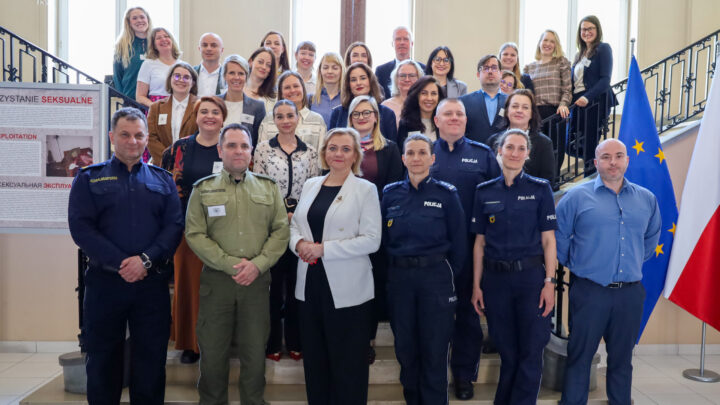
CBSS TF-THB meets in Gdańsk to strengthen regional cooperation against human trafficking
On 20 and 21 May 2026, the CBSS Task Force Against Trafficking in Human Beings (TF-THB) held its third and final meeting under the CBSS Polish Presidency in…
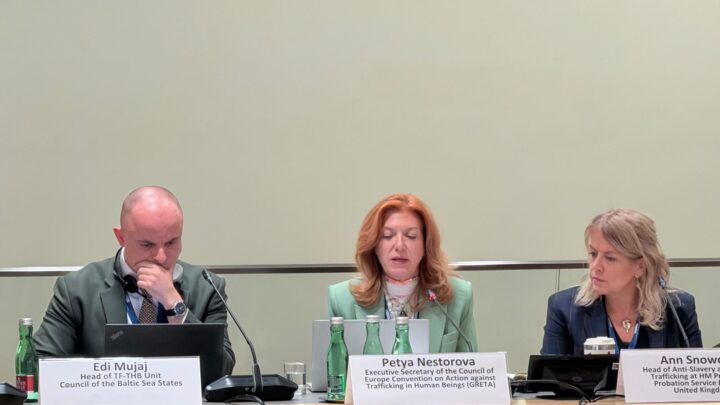
CBSS co-hosts anti-trafficking side event in Vienna
Edi Mujaj (top left), Head of the CBSS Task Force Against Human Trafficking, moderated the event. Photo: Courtesy of OSCE. On 20 April 2026, the Council…